Mattancherry Palace, Kochi. Ramayana mural, 16th century. Photograph: Radhika Suresh.
From the Field
Photographs from active fieldwork across Kerala's temple and palace sites. All images are original documentation taken during research visits conducted between 2024 and 2026.
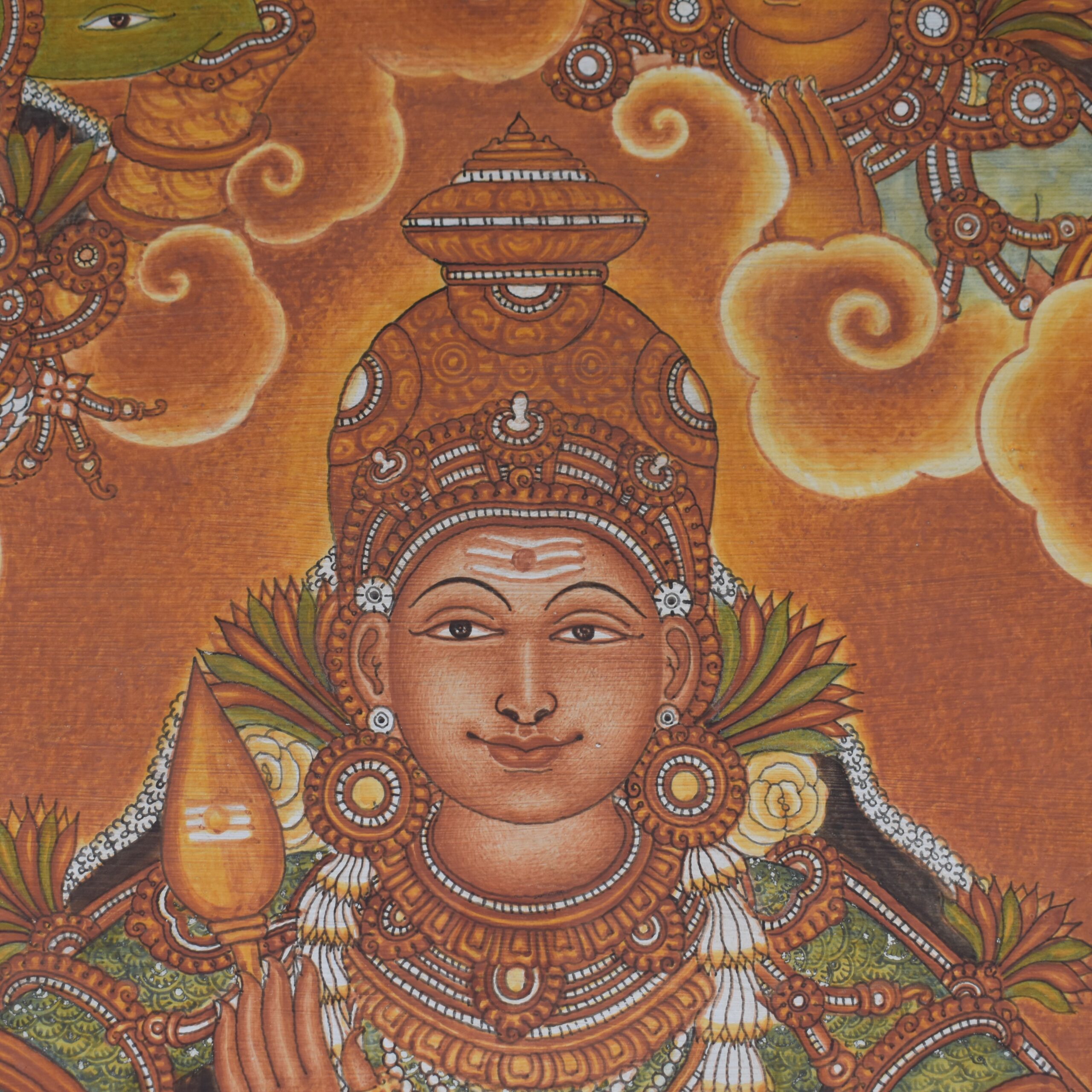
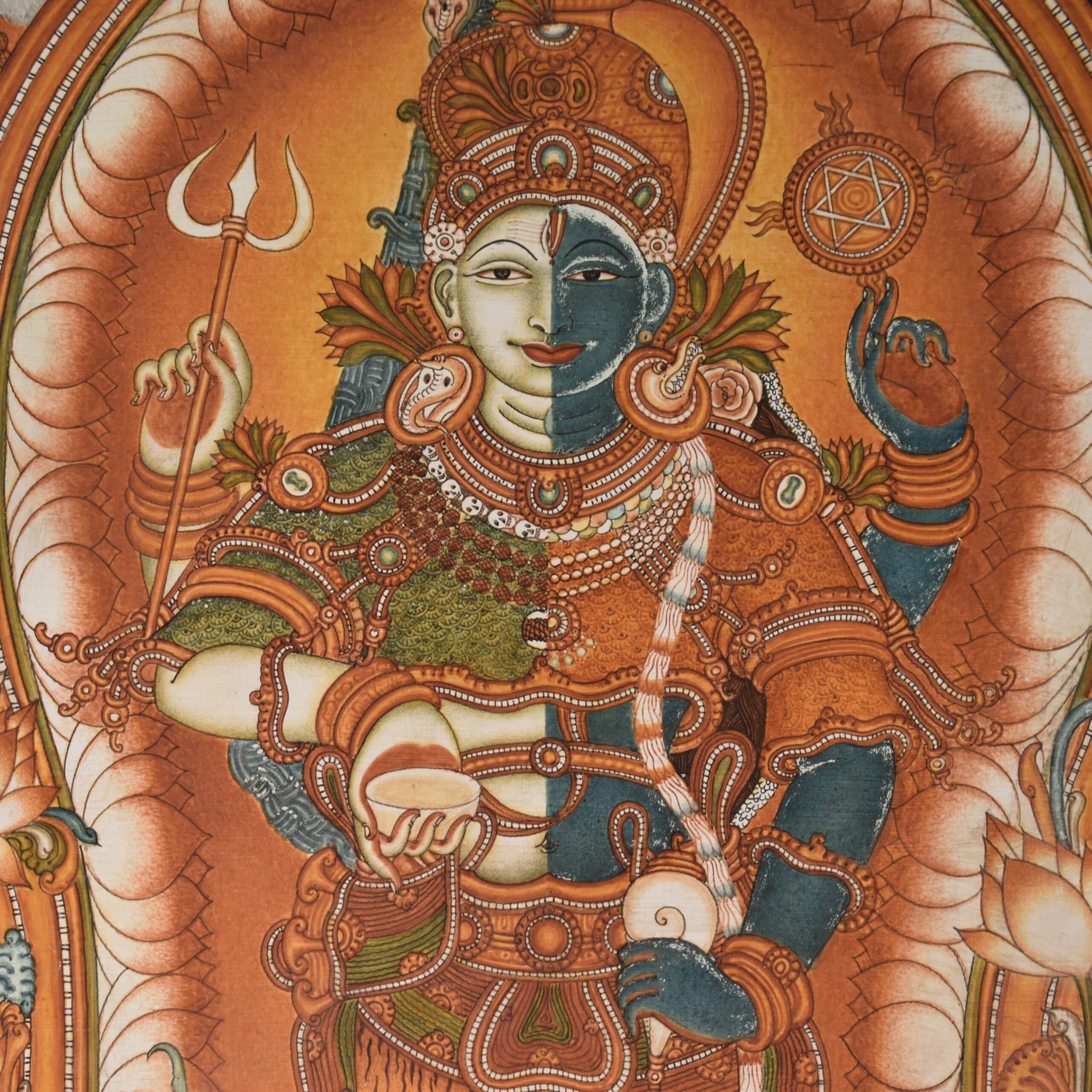
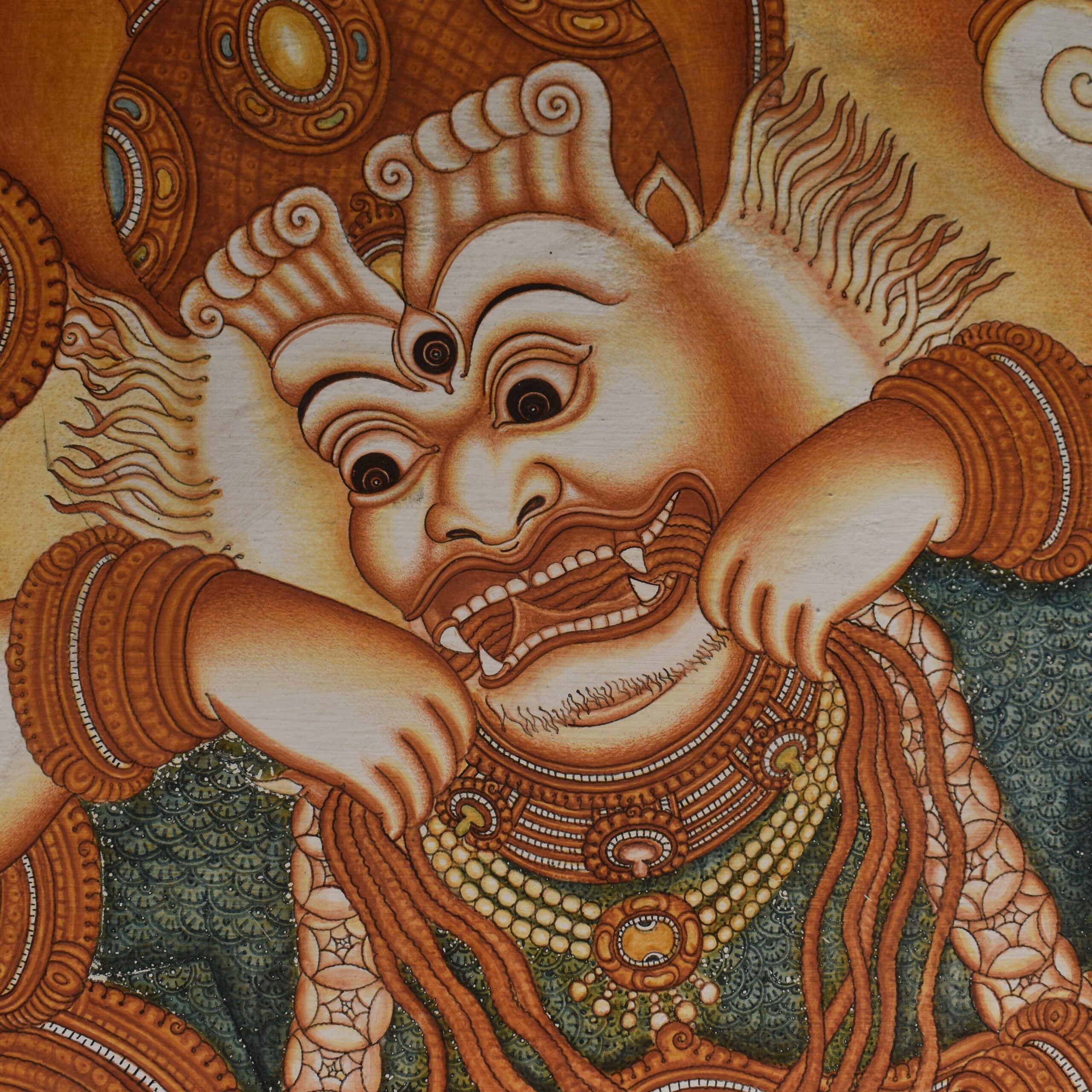
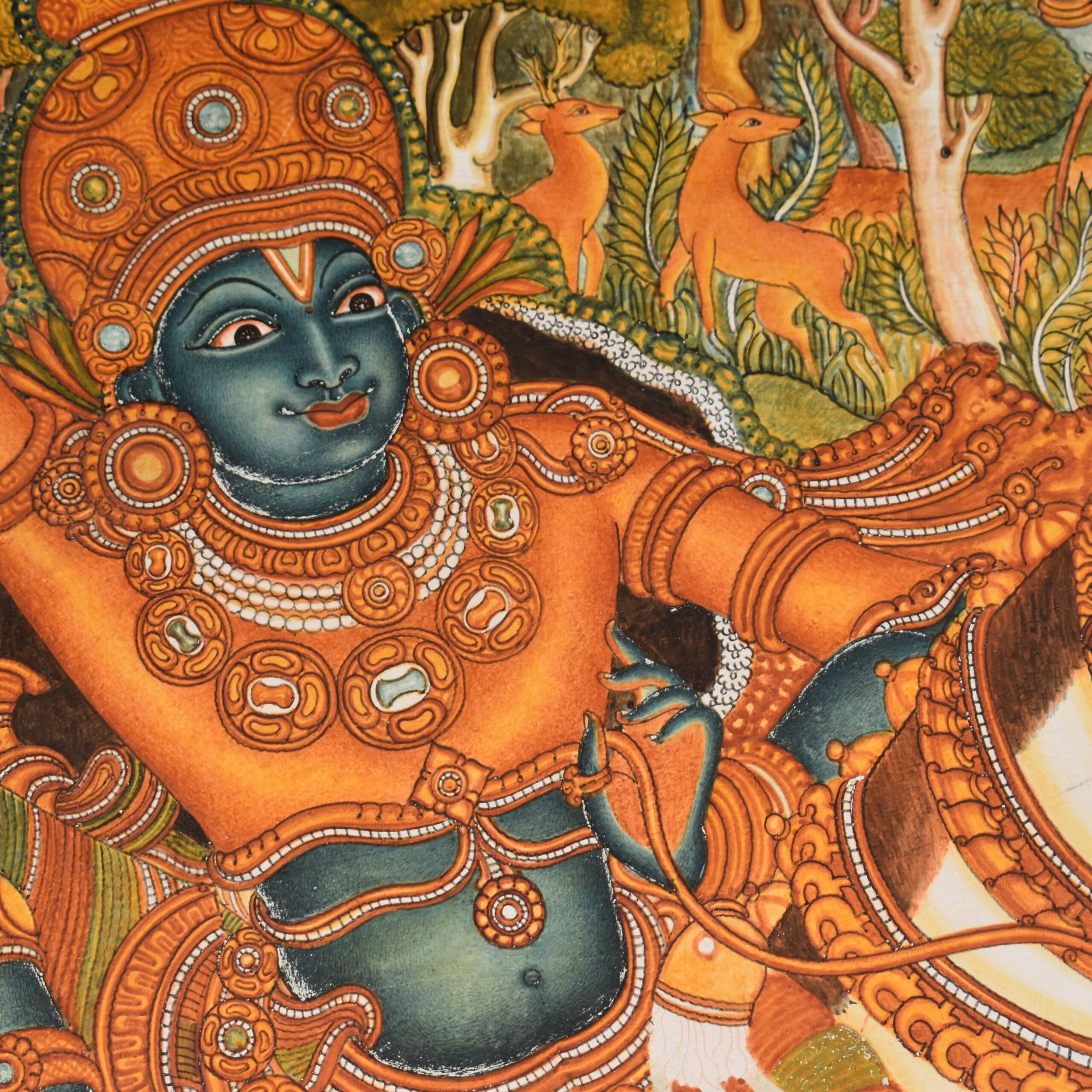
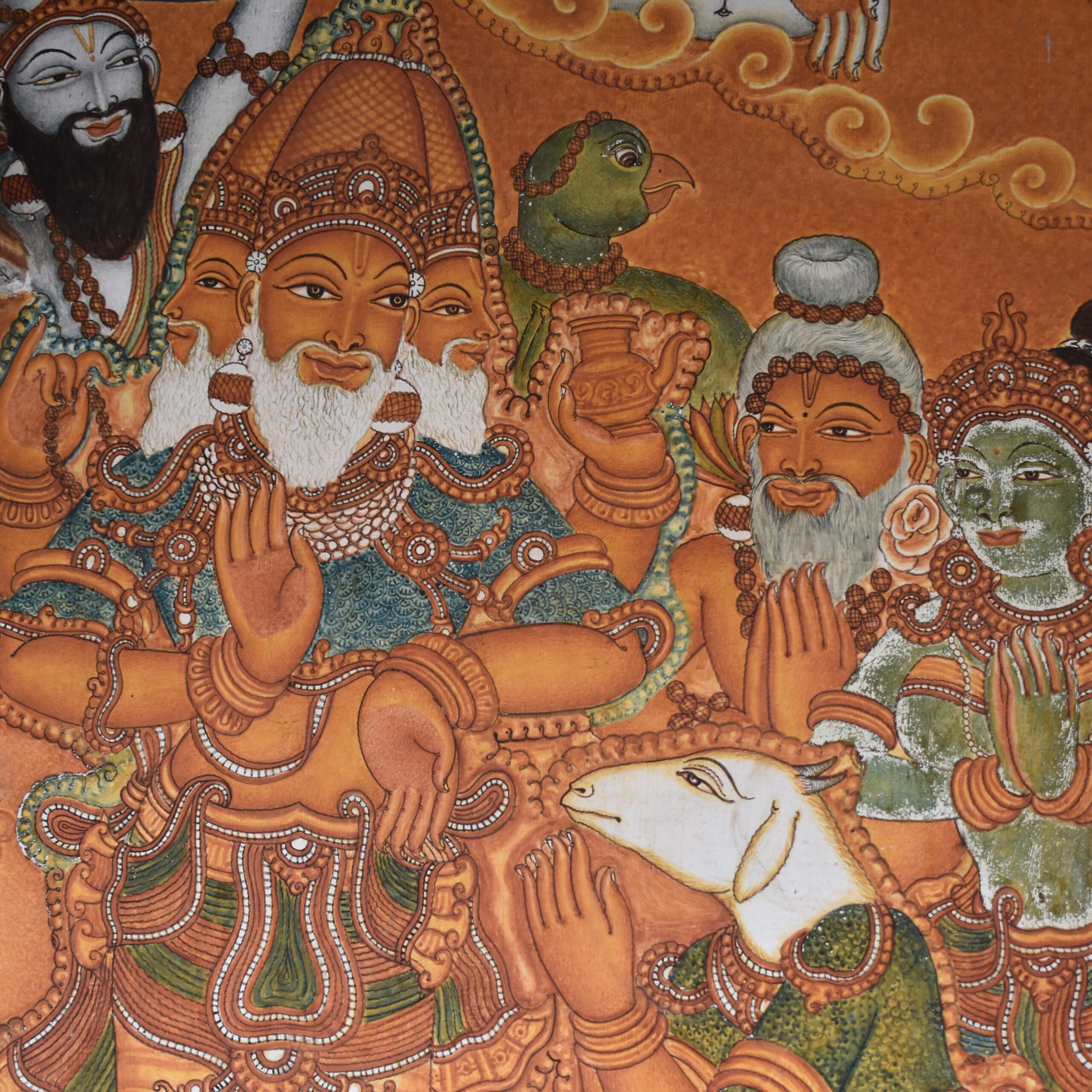
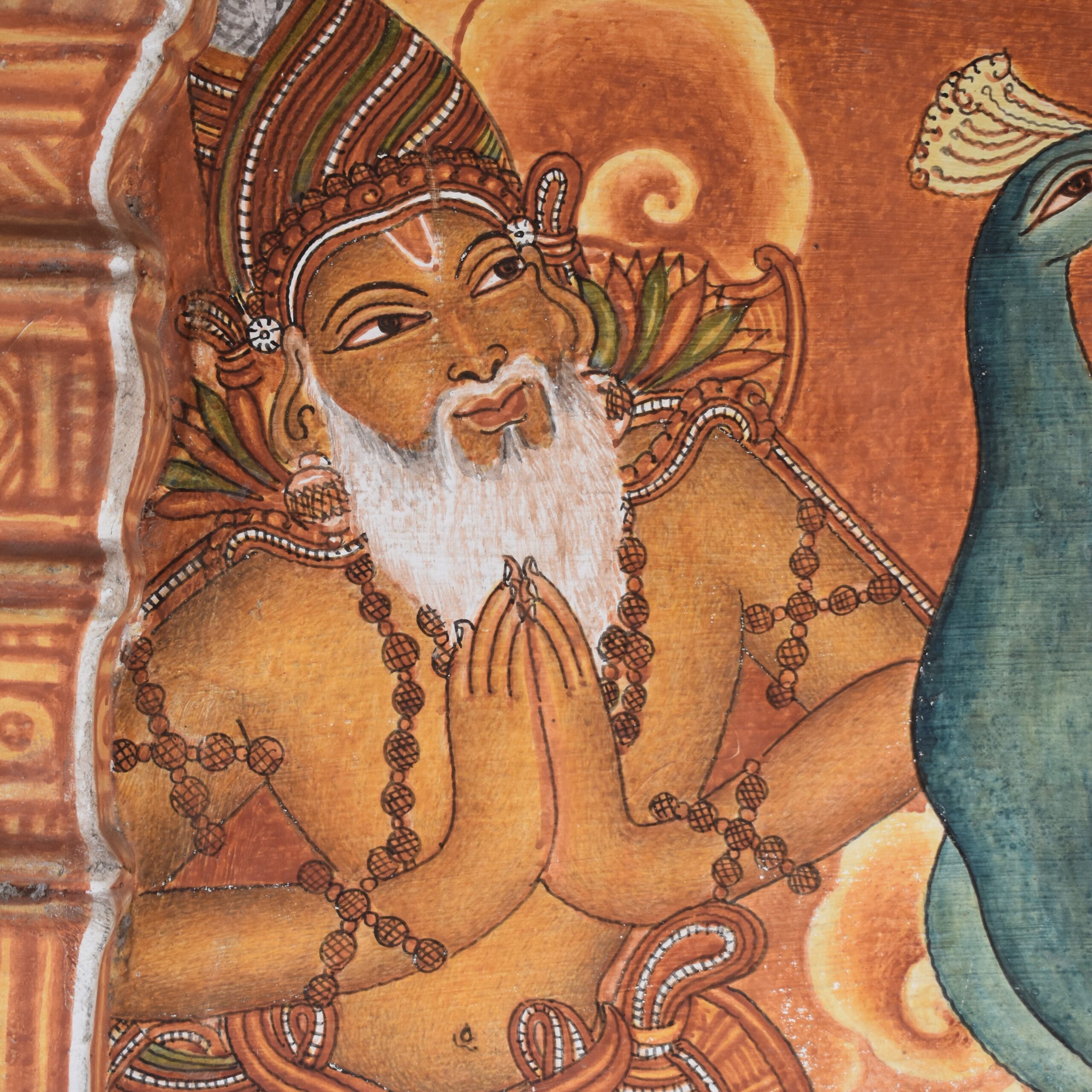
Images from active temple sites published with permission from the respective governing authorities.
Search the Archive
Search the documented panels by title, deity or site. Filter and sort the results — including in the order you would meet them walking clockwise around the wall.
Go Deeper
Essays on Kerala murals — written for anyone curious enough to look closely. No prior knowledge required.
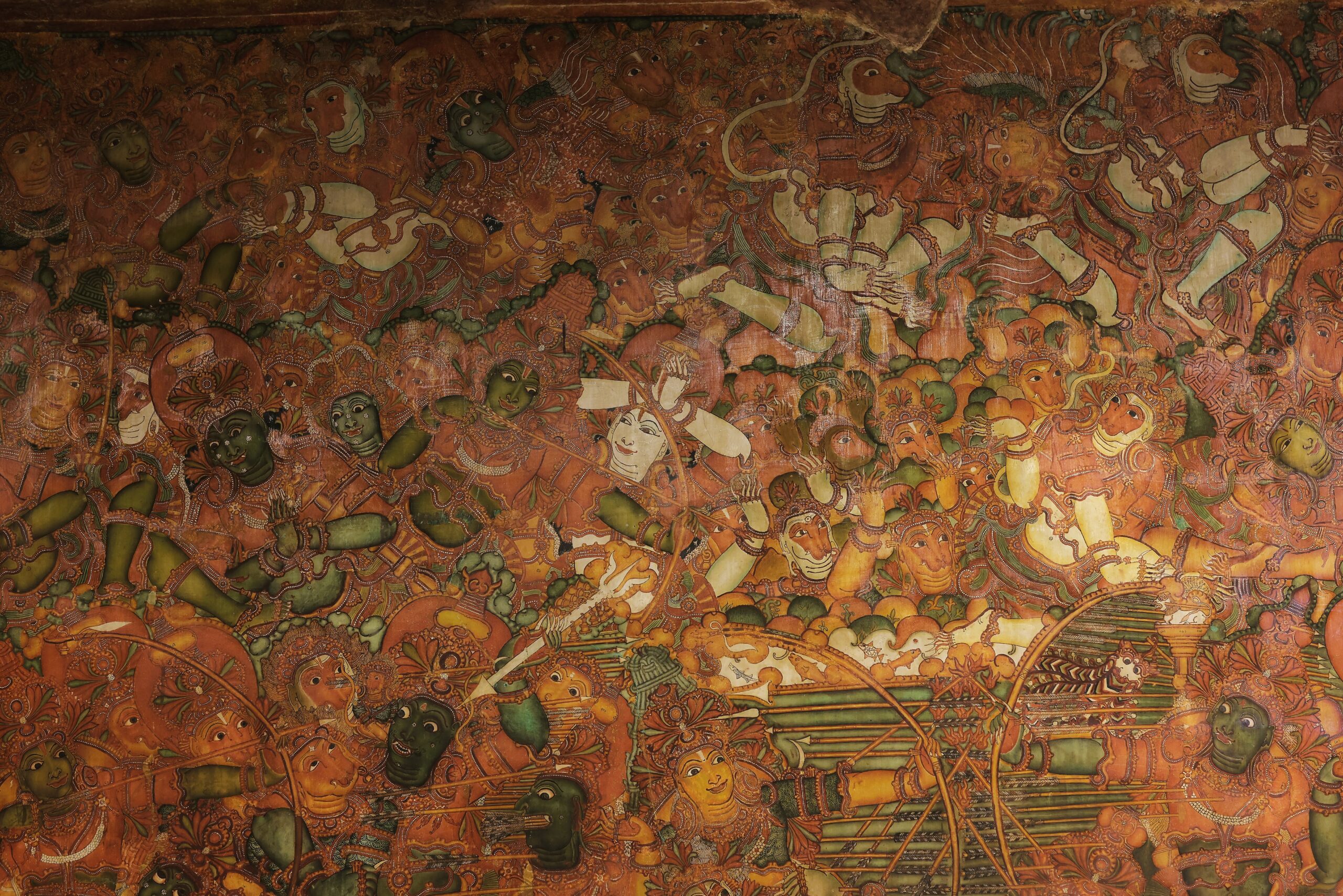 Essay · Space & Ritual
Palace Murals
The tradition moved from sanctum to royal chamber and carried its visual grammar with it — but not the rules about who could look.
Read the Essay →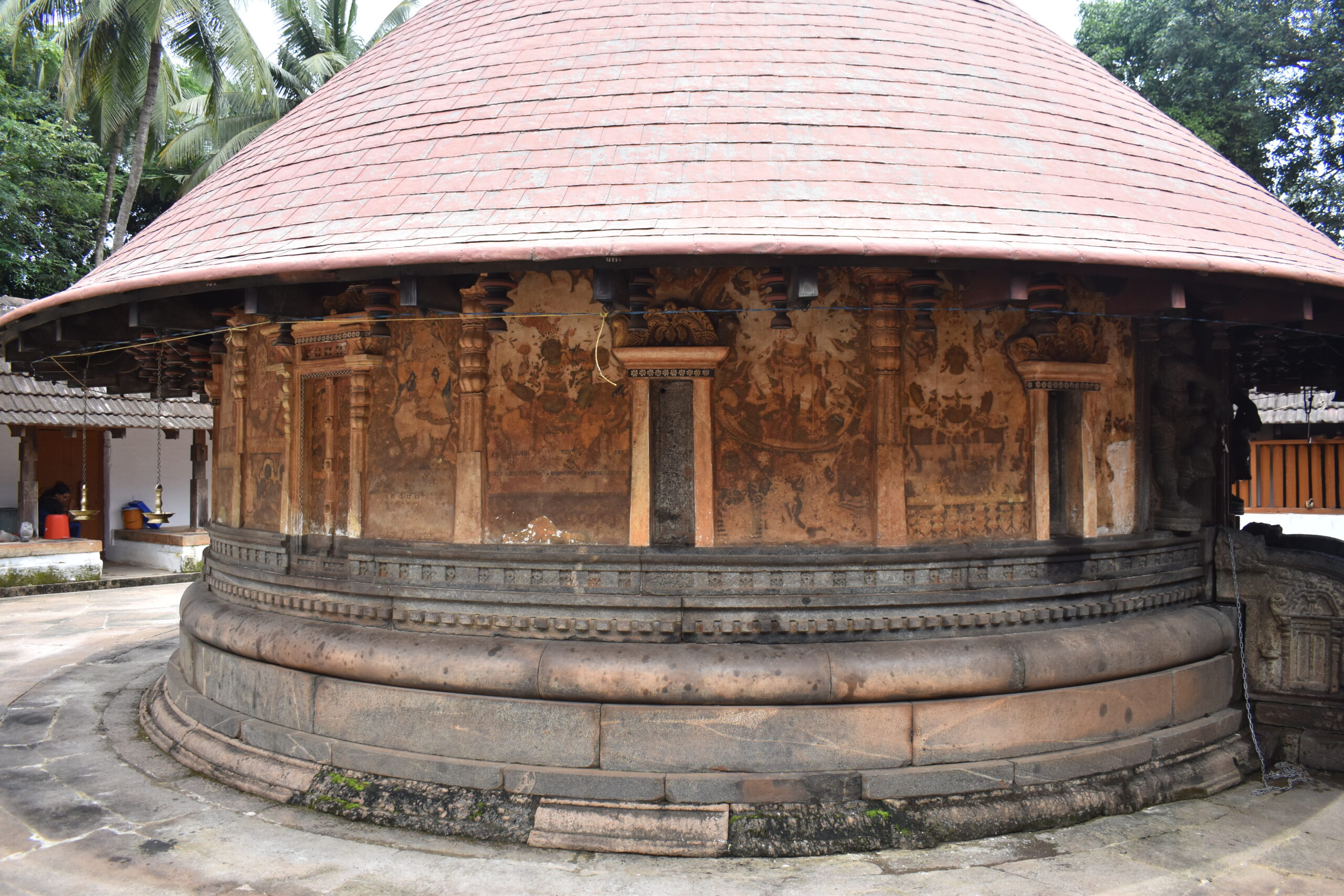 Essay · History
Origins
On patronage, power, and the decision to cover a wall in images rather than leave it bare.
Read the Essay →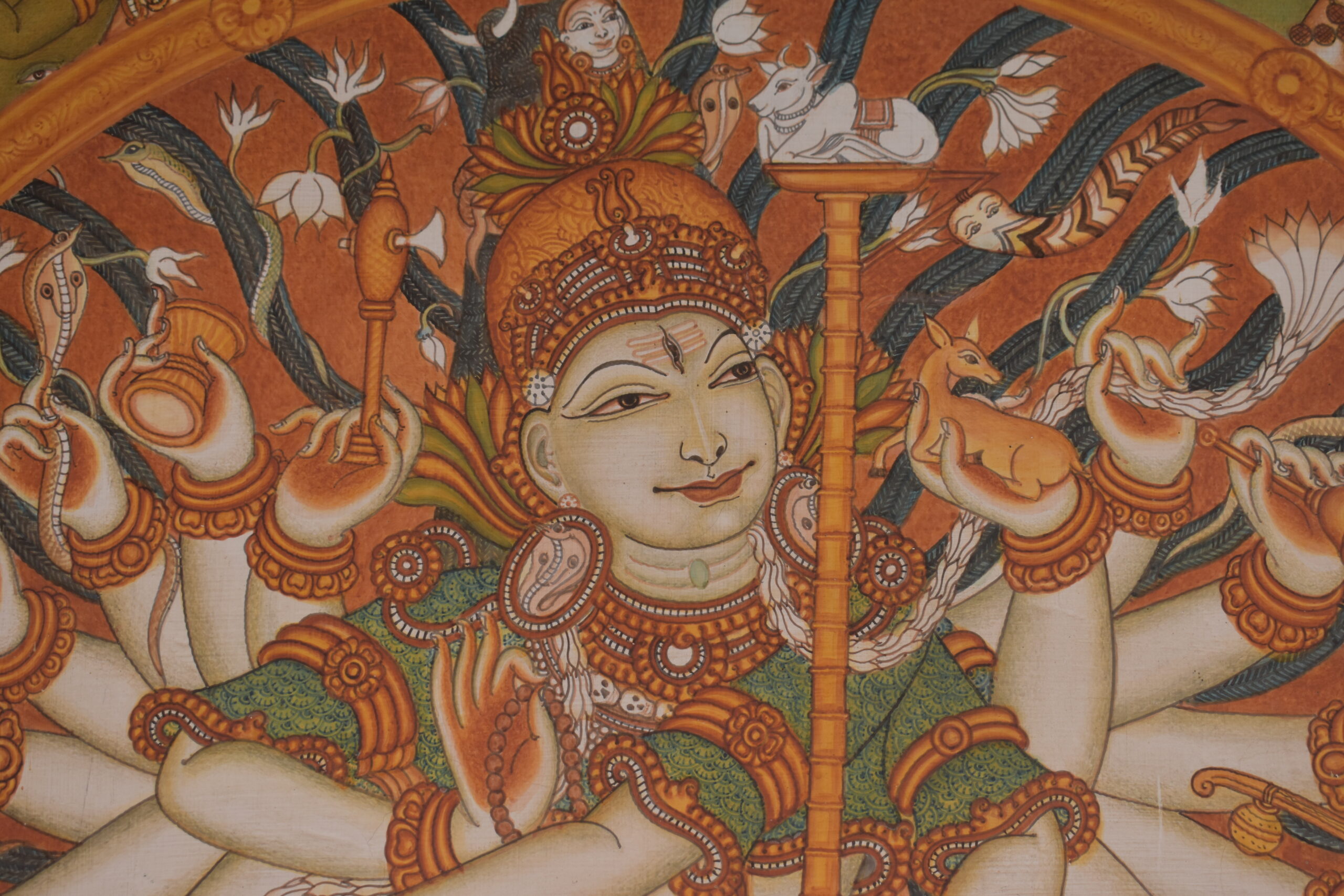 Essay · Conservation
What Is Lost, What Remains
The deterioration and survival of Kerala's murals — what conservation can do, and what it cannot.
Read the Essay →